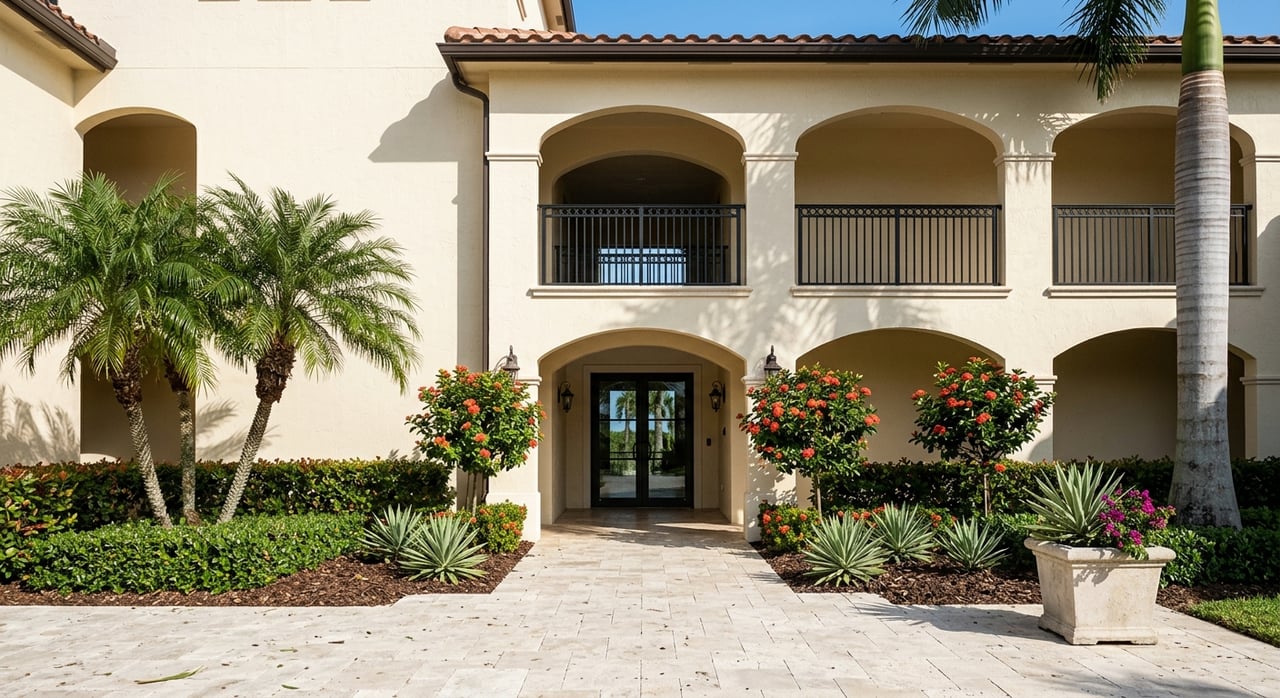
Condo Or Single-Family In Stuart? How To Decide
April 16, 2026
April 16, 2026
Buying in Stuart often comes down to one big question: do you want convenience or control? If you are deciding between a condo and a single-family home, you are not alone. Stuart gives you a real mix of both, and the right fit depends on how you want to live, what costs you are comfortable with, and how much responsibility you want to manage yourself. Let’s break it down.
In Martin County, the property appraiser reports 51,022 single-family homes and 15,037 condo units, which shows how common both options are across the local market. Inside Stuart, housing is more mixed than the county overall, with a 58.9% owner-occupied housing rate and a median owner-occupied home value of $329,400, according to U.S. Census QuickFacts for Stuart.
That matters because your choice is not just about price. It is about ownership style, maintenance, insurance, financing, and how much flexibility you want day to day. In Stuart, those details can shape your experience just as much as the floor plan.
Under Florida’s Condominium Act, you own your unit and have exclusive possession of it, but the condo association controls the common elements. The association can maintain, repair, replace, and assess costs for those shared areas.
In practical terms, that usually means less exterior upkeep for you. It also means more shared decision-making, more rules, and less individual control outside your unit.
A single-family home often gives you more privacy and more direct control over the home, yard, and improvements. That said, detached homes are not always free of rules.
If the property is in an HOA, it is governed by Florida’s Homeowners’ Association Act. So in many Stuart communities, the real comparison is not rules versus no rules. It is condo association rules versus HOA rules.
If you travel often, live seasonally, or simply want a more lock-and-leave setup, a condo may make sense. This option often appeals to buyers who would rather trade some control for shared maintenance and convenience.
A condo can also be a strong fit if you are comfortable reviewing association budgets, reserve funding, insurance, and inspection history before closing. In other words, the easier day-to-day lifestyle usually comes with more homework upfront.
If you want a yard, more separation from neighbors, or greater control over your property, a single-family home may be the better match. Many buyers also prefer detached homes because the ownership structure is simpler to understand.
Single-family homes can also reduce exposure to certain condo-specific issues tied to building-wide budgeting, inspections, and project eligibility. If predictability and autonomy matter most to you, that can be a major tie-breaker.
Condo dues are only one part of the cost picture. According to Fannie Mae’s condo project guidance, condo projects involve shared financial obligations for buildings, exterior property, and amenities, and lenders review project eligibility during underwriting.
A condo project can become ineligible for financing for reasons such as critical repairs, inadequate insurance, significant pending litigation, or condotel and short-term-rental characteristics. That means even if you love the unit itself, the project’s financial and physical condition can affect your financing path.
With a single-family home, your costs are often easier to connect directly to your own property. You may still have HOA dues if the home is in a managed community, but you are generally not tied to a shared building structure in the same way a condo owner is.
That can feel more straightforward, especially if you want to plan for repairs and improvements on your own timeline. Still, you will likely take on more direct maintenance responsibility.
Florida’s condo laws have become a major part of the buying conversation. Under Chapter 718, certain older, unit-owner-controlled condo associations for buildings three stories or higher must complete a Structural Integrity Reserve Study by the deadlines set in the law.
The study must identify key building components, remaining useful life, replacement cost or deferred maintenance expense, and a reserve funding plan. For buyers, that can directly affect monthly dues, reserve contributions, and the possibility of special assessments.
Under Florida Statute 553.899, milestone inspections generally apply to residential condo and co-op buildings that are three habitable stories or more and meet the age threshold in the law. The statute does not apply to single-family, two-family, three-family, or four-family dwellings with three or fewer habitable stories above ground.
That does not mean a single-family home is maintenance-free. It simply means detached homes are not subject to the same condo milestone-inspection framework when they meet that exemption.
In Martin County, flood and storm planning should be part of your home search from the start. The county states that every property is in a flood zone, and zones beginning with A or V are considered higher risk. The county also notes that evacuation zones are separate from flood zones, with Zone AB including barrier islands and many low-lying coastal areas, according to Martin County’s evacuation and flood guidance.
This is important in both condos and single-family homes. Standard homeowners insurance typically does not cover flood damage, and flood insurance is required in Special Flood Hazard Areas for homes with federally backed mortgages.
Fannie Mae also notes that condo projects must carry a master property insurance policy covering common elements and residential structures. Even with that master policy in place, you may still need your own coverage for parts of the interior, personal property, liability, or other gaps depending on the building and policy details.
That is why one of the smartest questions you can ask is simple: what does the master policy cover, and what would you still need to insure yourself?
If the Stuart property will be your permanent residence, you may be eligible for Florida’s homestead exemption, which can reduce taxable value by up to $50,000. Florida’s Save Our Homes rules may also limit annual assessment increases, and some tax benefit differences may be portable when moving from one Florida homestead to another.
This is not a condo-versus-single-family issue alone, but it can shape your total ownership cost. If you plan to make the property your primary residence, it is worth reviewing early.
If you are weighing both options, focus on the tradeoffs that matter most to your life.
No matter which way you are leaning, these are smart questions to bring into your search:
In Stuart, the best property type is usually the one that matches the responsibility you want to handle later with the cost structure you are comfortable taking on now. For many buyers, the biggest tie-breakers are maintenance tolerance, association oversight, flood exposure, and financing flexibility.
If you want a lower-maintenance home and do not mind shared governance, a condo may be the better fit. If you want more privacy, more control, and fewer building-wide variables, a single-family home may be the smarter move.
When you are ready to compare real options in Stuart, Nora Hambrick can help you sort through the details, review the tradeoffs, and choose a home that fits how you actually want to live.
Stay up to date on the latest real estate trends.


Your go-to real estate team. We have brought together a team of experts equipped with knowledge and specialized experience to assist you in your buying and selling goals. Contact Us today for a free consultation for buying, selling, renting or investing.