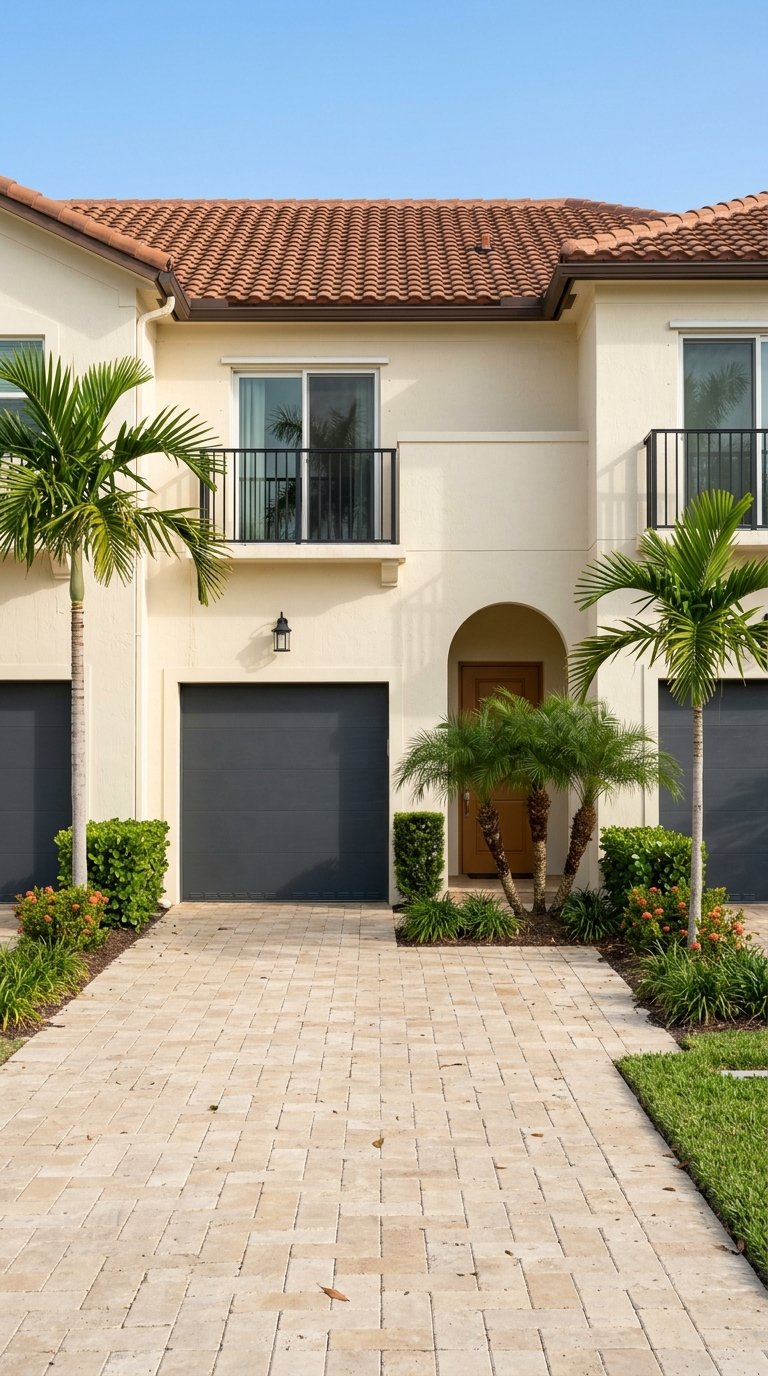
Townhome Or Single-Family Living In Palm City?
June 25, 2026
June 25, 2026
Trying to choose between a townhome and a single-family home in Palm City? You are not alone. In a market where most residents own their homes and values are strong, the real question is often less about whether to buy and more about how you want to live day to day. If you are weighing convenience, privacy, maintenance, HOA rules, and long-term flexibility, this guide will help you sort through the tradeoffs in Palm City. Let’s dive in.
Palm City is an owner-focused housing market. Census data shows an owner-occupied rate of 88.7%, a median owner-occupied home value of $532,100, median monthly owner costs with a mortgage of $2,667, and a median household income of $117,689.
That matters because the townhome versus single-family decision here is usually about lifestyle fit, monthly carrying costs, and how you want to use your property over time. It is less about choosing between a renter-style setup and a traditional ownership experience.
Inventory also helps frame the choice. Current listing data shows far more detached homes than townhomes in Palm City, with townhomes representing a smaller, more concentrated part of the market. That means if you want a townhome, your options may center around a smaller group of communities.
Palm City townhomes cover a wider range than many buyers expect. Current examples range roughly from 1,236 to 1,954 square feet, often with 2 to 3 bedrooms and 2.5 baths, and current asking prices run from about $210,000 to $849,777.
That range tells you something important. A townhome in Palm City is not always an entry-level purchase. Some options are more compact and amenity-driven, while others are tied to golf, yacht, or waterfront settings.
For many buyers, the biggest draw is convenience. Townhomes often offer a smaller footprint, shared amenities, and less hands-on exterior upkeep, which can be appealing if you want a more lock-and-leave lifestyle.
In Palm City, amenities are often a major part of the townhome value equation. For example, Sunset Trace documents reference two pools, tennis courts, basketball, a playground, and a clubhouse.
If those features match how you want to spend your time, a townhome can deliver a lot more than just square footage. You may be trading private yard space for access to shared amenities that support an easier routine.
The other side of that convenience is structure. HOA documents in Palm City townhome communities may include rules around guest access, leasing approval, move-in timing, and architectural review for exterior changes like patios, screen doors, storm shutters, and landscaping.
Those rules are not necessarily a negative, but they do shape your ownership experience. If you like predictability and shared standards, that may feel reassuring. If you want full control over exterior changes or rental flexibility, it may feel limiting.
Florida law requires buyers in HOA-governed communities to receive a disclosure summary before closing. That summary explains association membership, recorded covenants, assessments, special assessments, and the possibility of a lien for nonpayment.
In practical terms, you should look beyond the list price. For a Palm City townhome, the real comparison includes monthly dues, what maintenance is covered, whether there are rental restrictions, and how approvals work for changes to the property.
If your priority is space, detached homes usually offer more of it. In Palm City, single-family communities can include larger lots, more privacy, more garage and storage space, and better flexibility for outdoor living.
Current local listing trends highlight why this matters to buyers. Detached homes in Palm City often feature open patios, fenced back yards, outdoor kitchens, pools, salt-water pools, and larger homesites, with options ranging from homes around 1,700 to 1,900 square feet to estate properties with 4,000 or more square feet.
For some households, that extra room changes daily life. It can mean better separation of space, more room for hobbies or guests, and more options for how you use the property in the future.
A detached home does not always mean giving up community features. In Palm City, some single-family communities offer gated entry, pools, fitness centers, clubhouses, tennis, basketball, and walking trails.
Canopy Creek, for example, promotes acreage homesites along with a pool, fitness center, clubhouse, tennis, basketball, and walking and equestrian trails. Other communities like Hammock Creek and Cobblestone also reflect the amenity-rich side of detached-home living.
This is a key point for Palm City buyers. A single-family home is not automatically rule-free.
Community standards may still apply to exterior improvements such as screening, fencing, and other visible changes. Florida law also gives HOAs authority over architectural standards and hurricane protection specifications, which can affect decisions involving shutters, roof systems, and exterior updates.
So if you are choosing detached housing because you assume there will be fewer restrictions, pause and verify that first. In Palm City, the better comparison is often which rules apply, not whether rules exist at all.
Some parts of Palm City naturally support a more compact, community-oriented style of housing. The Old Palm City redevelopment plan promotes compact, mixed-use, pedestrian-oriented development and walkable neighborhoods with amenities, and it includes townhomes among permitted uses in the COR district.
That helps explain why certain townhome clusters may feel more village-like. By contrast, many detached-home areas in Palm City lean more toward larger lots, private outdoor space, and a lower-density feel.
Neither option is better across the board. The right fit depends on whether you picture your next home as low-maintenance and amenity-connected, or more private and space-oriented.
No matter which property type you prefer, Palm City buyers need to pay close attention to flood and storm planning. Martin County states that every structure is in a flood zone, and flood zones are not the same as evacuation zones.
The county’s evacuation zones are AB, CD, and E. Martin County also notes that high-risk A and V flood zones require flood insurance for federally backed mortgages.
This is one of the most important practical steps in your home search. A townhome and a single-family home can carry very different insurance costs depending on the address, flood zone, and community setup.
When you are deciding between a Palm City townhome and a single-family home, try comparing them across the issues that affect your daily life most.
| Factor | Townhome | Single-Family Home |
|---|---|---|
| Maintenance | Often less day-to-day exterior upkeep | More owner responsibility is common |
| Amenities | Often a major part of the value | May vary by community |
| Outdoor space | Usually more limited | Usually more yard and privacy |
| HOA involvement | Often more visible in daily ownership | Can still be significant |
| Flexibility for changes | Approval may be needed for exterior updates | Approval may still be needed in HOA communities |
| Inventory in Palm City | Narrower selection | Broader selection |
This kind of side-by-side view can quickly clarify what matters most to you. If your top priorities are simplicity and shared amenities, a townhome may rise to the top. If you want room to spread out and more private outdoor living, a detached home may make more sense.
Before you commit to either property type in Palm City, use a practical checklist:
These steps can save you from surprises later. They also help you compare homes on real ownership costs, not just the list price.
A Palm City townhome may be the better fit if you want a smaller footprint, shared amenities, and less day-to-day exterior maintenance. That choice often comes with HOA dues, approval processes, and less control over some exterior decisions, but it can deliver convenience and a more lock-and-leave lifestyle.
A Palm City single-family home may be the better fit if you want more privacy, more yard space, more storage, and greater flexibility for how you live. Just remember that many detached-home neighborhoods still include HOA oversight, architectural review, and community-specific standards.
The best move is to compare each home through the lens of your actual routine. Think about how much maintenance you want, how important amenities are, how often you travel, and how much flexibility you want for future changes.
If you want help comparing Palm City communities, reviewing ownership tradeoffs, and narrowing your search with a clear plan, Nora Hambrick can help you make a confident choice.
Stay up to date on the latest real estate trends.
Your go-to real estate team. We have brought together a team of experts equipped with knowledge and specialized experience to assist you in your buying and selling goals. Contact Us today for a free consultation for buying, selling, renting or investing.