Is Palm City Mixed-Use Real Estate Right for You?
July 2, 2026
July 2, 2026
Wondering whether a mixed-use property in Palm City is a smart move for your goals? If you are thinking about combining business use, rental income, or owner-occupancy in one property, this part of Martin County offers some real potential, but it also comes with more moving parts than a standard residential or commercial purchase. This guide will help you understand where mixed-use works in Palm City, what these properties usually look like, and what to review before you buy. Let’s dive in.
In Martin County, a mixed-use project is generally defined as one or more buildings that combine residential use with complementary commercial, institutional, or limited-impact industrial uses in one unified project. The county also describes mixed-use as a walkable pattern of uses that can grow over time.
That matters because mixed-use in Palm City is not just about having a shop downstairs and a residence upstairs. It is part of a broader planning approach tied to walkability, redevelopment, and how buildings relate to the street, parking, and surrounding uses.
Mixed-use opportunities in Palm City are not spread evenly across the area. They are mainly concentrated in designated corridors and planned districts where the county has already built a framework for this type of development.
Old Palm City is the clearest local example. The Old Palm City CRA plan focuses on improving Mapp Road, sidewalks, bikeways, gateways, neighborhood connections, and infrastructure to support commercial and residential growth.
The completed Mapp Road Town Center includes wide sidewalks, landscaping, decorative streetlights, bike lanes, drainage improvements, and on-street parking. Those features are important because they help create the kind of environment mixed-use projects usually need to function well.
Western Palm City also includes the PMUV district, a larger village-style mixed-use framework west of Florida’s Turnpike and north of SW Martin Highway. This area is designed to be compact and pedestrian-oriented, with a mix of commercial and residential uses and significant open space preservation.
Its standards emphasize front-facing entrances, street-level office or retail in key areas, and parking behind buildings or accessed from side streets or alleys when possible. In simple terms, design matters here as much as use.
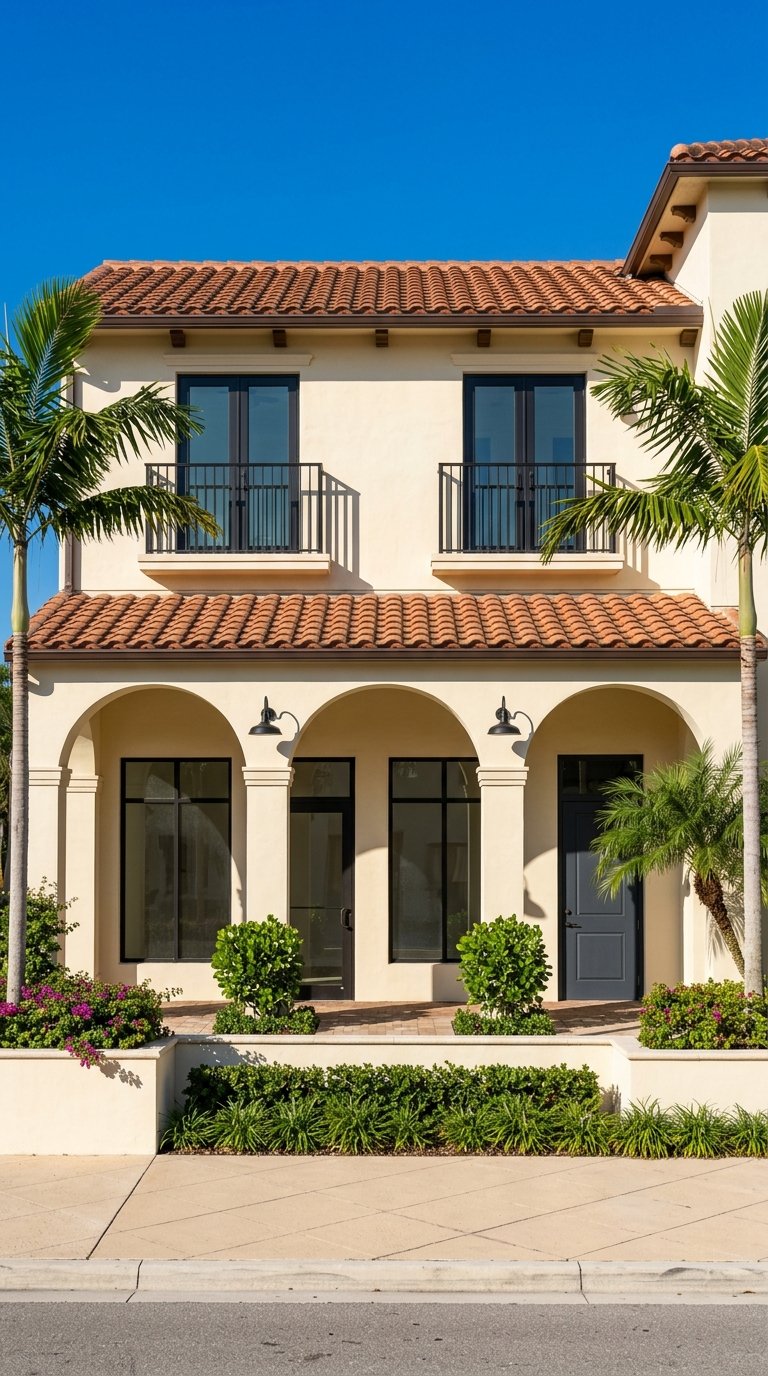
If you picture a generic strip center, Palm City’s local code suggests something more tailored. In Old Palm City, the redevelopment code allows building types such as shopfront, mixed-use, office, apartment, courtyard, townhouse, live/work, cottage, duplex, and related formats.
Mixed-use buildings may include multiple tenants or occupancies and can contain residences, lodging, and businesses. Some office buildings may also include storefront frontage, which creates more flexibility depending on the parcel and district.
Many local mixed-use forms are built close to the sidewalk, with parking to the side or rear. Live/work and townhouse-style formats often rely more on rear-service layouts.
That means a property’s value is not only about square footage or rent potential. Frontage, entrances, parking layout, and the relationship to the street can directly affect how usable the property is for your intended plan.
Palm City has a relatively stable and higher-income residential base. Census Bureau ACS 2020-2024 data show an owner-occupied housing rate of 89.7%, a median owner-occupied home value of $563,400, a median household income of $125,820, and 28.9% of residents age 65 or older.
Those numbers suggest a market that may support local-serving tenants and service-oriented uses that benefit from repeat demand. If you are considering a mixed-use asset with office, convenience, or everyday service tenants, Palm City’s local profile may be part of the appeal.
Based on the area’s demographics, uses tied to daily needs may be easier to defend than concepts that depend only on destination traffic. That does not guarantee performance, of course, but it does help frame what kind of tenant mix may make sense.
Visibility, access, and parking still matter. Even in a strong local-serving corridor, a property that is hard to enter or awkward to park can be harder to lease or operate.
A county retail study for the Mapp Road commercial area found potential demand for up to 92,400 square feet of additional retail and restaurant development and recommended new local-serving commercial clusters with office, residential, and retail uses between Martin Downs and Martin Highway.
Because that study dates to 2019, it is best used as planning context rather than current underwriting proof. Still, it reinforces that county planners have identified Mapp Road as a place where mixed-use and local-serving commercial growth fit the long-term vision.
A mixed-use property in Palm City may be a strong fit if you want more than one use or income stream from the same asset. It can also make sense if you want to occupy part of the property while generating income from another portion.
You may want to look closer if your goals include:
Mixed-use is often more complex than buying a single-use residential or commercial property. If you want a simple purchase with fewer entitlement and layout questions, another property type may be easier to manage.
It may be less ideal if you are not comfortable with zoning review, site-plan analysis, parking questions, or a more detailed financial review. These properties can offer flexibility, but they usually require more homework.
In Palm City, the key risks are not only about finding tenants. Local sources point to infrastructure and entitlement as major issues to evaluate before you move forward.
The county’s Mapp Road retail study noted that limited utility and stormwater capacity had been holding back new commercial and residential development. At the same time, county projects tied to walkability, drainage, and placemaking show that public investment is ongoing in important redevelopment areas.
Before buying a mixed-use property in Palm City, focus on a few practical questions:
These questions matter because Martin County’s land development framework is project-specific. Two properties that look similar at first glance may have very different development or operating potential.
Not every Palm City address offers the same mixed-use path. Local staff reports tied to recent projects show that activity remains concentrated in overlay districts and planned mixed-use areas, including sites on Mapp Road and larger PMUV-zoned land.
That means buying the right location is often half the battle. A property inside a district designed for mixed-use generally offers a more predictable path than a property outside those planned frameworks.
If you are trying to decide whether this property type fits your goals, keep the decision centered on three things: use, complexity, and location.
If your intended use matches the county’s framework, you can handle the added complexity, and the property sits in a corridor where mixed-use is already part of the plan, the opportunity may be worth serious attention. If one of those three pieces is weak, you may want to pause and review alternatives.
Palm City can be a compelling place to consider mixed-use, especially in Old Palm City and other planned districts where walkability, frontage, and redevelopment are already shaping the market. The area’s stable homeowner base, higher household income, and county-backed mixed-use planning create a useful foundation for the right property and strategy.
The key is to look beyond the label. A mixed-use property here should be evaluated through zoning, site design, parking, infrastructure, and how well the intended use fits the district. If you want clear guidance on Palm City mixed-use opportunities, commercial positioning, or owner-occupant strategy, connect with Nora Hambrick for a tailored conversation.
Stay up to date on the latest real estate trends.
Your go-to real estate team. We have brought together a team of experts equipped with knowledge and specialized experience to assist you in your buying and selling goals. Contact Us today for a free consultation for buying, selling, renting or investing.